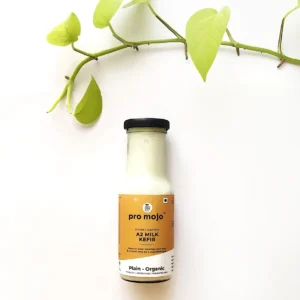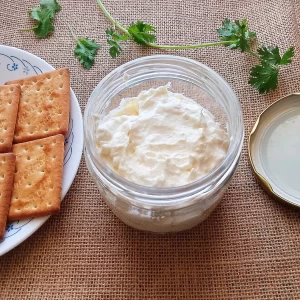

Is milk kefir good for kids? Is it safe for children to drink kefir? Can milk kefir be given to babies – and if yes, how much is appropriate?
These are some of the most common questions parents ask us – whether at pop-ups, through friends and family, or when they first try Pro Mojo’s milk kefir at home.
As parents ourselves, we understand the hesitation. When it comes to children, especially foods that are fermented or unfamiliar, clarity and reassurance matter more than claims. This post shares our experience, general age-wise guidance, and what we’ve learned along the way—so you can decide what feels right for your child.
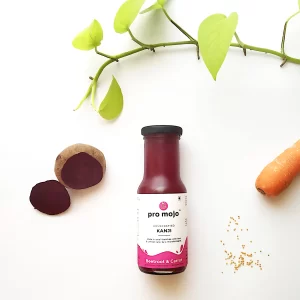
Milk kefir for kids: how it’s different from kombucha
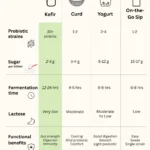
Unlike kombucha, milk Kefir is a fermented food made from a single, natural ingredient – milk. Pro Mojo’s milk Kefir is fermented using traditional kefir grains and Akshayakalpa’s A2 organic milk, which is free from antibiotics. With no added ingredients and naturally low lactose due to fermentation, it is often easier to digest than regular milk.
Pro Mojo’s milk kefir is a naturally probiotic food, containing a diverse mix of beneficial bacteria and yeast commonly found in traditional milk kefir. Independent lab tests have identified probiotic strains such as Bifidobacterium in high concentrations – around 2 × 10¹⁰ CFU per 100 ml – making it a robust, food-based source of probiotics for both children and adults.
When and how to introduce milk kefir for kids
Before sharing general age-wise guidance, we wanted to briefly share how we introduced milk kefir to our own daughter, and what we noticed over time. We hope this personal experience offers reassurance if you are considering it for your child as well.
Our daughter’s experience with Kefir
We first introduced milk kefir to our daughter when she was around 4½ years old, after discussing it with her paediatrician. We began with very small amounts, simply to see how she felt.
Over the next few months, we noticed she was falling sick far less often, and her appetite and energy gradually improved. Observing these changes gave us confidence that milk kefir could be a gentle, natural addition to her routine.
Why Milk Kefir helps kids’ gut health
Milk kefir offers gentle, natural support for growing children. It can help digestion, support gut balance, oral health, and immunity, while also providing nutrients such as protein, calcium, and healthy fats – all in a form that many children can consume daily 1.
Because it is a fermented food, kefir supports the gut in a gradual, food-based way rather than acting as a quick-fix supplement.
In our experience, many children across age groups are able to tolerate milk kefir well. Some of our customers introduced it during the weaning phase (with medical guidance), while others began during toddlerhood or early childhood as part of a daily routine.
In this post, we aim to address common parent concerns – such as can kids drink milk kefir, is it safe for babies, and how much is appropriate at different ages – and share general, experience-based guidance.
Suggested serving by age (general guidance)
Below is a general reference guide based on our experience and parent feedback. These are not medical recommendations.
| Age Group | How to Start | Comfortable range (once adapted) | Notes |
|---|---|---|---|
| < 6 months | Not recommended | — | Breastmilk/formula only |
| 6–12 months | Only with pediatrician’s approval | 1–2 tsp mixed into food | Introduce slowly and watch carefully |
| 1–3 years | 1–2 tsp/day | ¼ – ½ cup (60-120ml) per day | Mix into curd or smoothies |
| 4+ years | 2–3 tbsp/day | ½ – 1 cup (120-240ml) per day | Split into 1–2 servings |
Note:
- These are general guidelines. If you’re unsure at any point, checking with your paediatrician is always a wise first step.
- Every child’s digestive system is different, so quantities should be adjusted based on individual comfort.
Nutrition Snapshot – of Pro Mojo’s plain A2 Milk Kefir
Here is a simple nutritional snapshot of Pro Mojo’s plain A2 milk kefir per 100 ml.
| Nutrient per 100 ml | Approximate amount | Why it matters for growing children |
|---|---|---|
| Energy | ~ 65 kcal | Gentle energy source without heavy load |
| Protein | ~ 3 g | Supports growth, muscles & overall development |
| Carbohydrates | ~ 5 g (Sugars ~2-3 g) | Lower sugar helps avoid spikes; good for appetite regulation |
| Fat | ~ 3-4 g | Contains healthy dairy fats needed for brain & cell growth |
| Calcium | ~ 130 mg | Critical for bone & teeth development |
| Probiotic cultures (CFU) | ~ 2 × 10¹⁰ / 100 ml | Diverse live cultures support gut health & immunity |
For any parent considering milk kefir for their child, hesitation is natural – we felt the same initially. Our suggestion is always to start slowly and observe how your child responds over the first few days.
How we introduced milk kefir safely at home
Here’s what helped us introduce milk kefir safely and comfortably at home:
- Checked with our paediatrician first
- Started with very small amounts
- Watched her digestion and comfort in the first week
- Increased slowly based on how she felt
- Kept servings age-appropriate
- Took breaks when dairy intake was already high
How it helped our daughter over time
From our own experience, we noticed several positive changes after introducing milk kefir when our daughter was around 4½ years old. As always, we began only after checking with our paediatrician and started with very small amounts. What surprised us was how quickly she developed a taste for it.
Over the first few weeks, we observed her digestion, appetite, sleep, and overall comfort. Over the following months, she seemed to fall sick less often and appeared more energetic. During her school PTM at the end of the academic year, her teacher even mentioned that she hadn’t taken a single sick leave!
She also gradually regained some of the weight she had lost earlier due to frequent illnesses. While every child is different, these observations encouraged us to continue including milk kefir as part of her routine.
What worked for our child may not work the exact same way for yours, and that’s completely okay – but it’s worth trying.
Can kids drink milk kefir daily?
How much does she have in a day?
We began with what we recommend to other parents as well – very small quantities. Initially, it was just 1-2 teaspoons a day, either mixed into curd or given plain after lunch.
As her comfort and liking grew, we gradually increased the amount to about 30-40 ml per day. Over time, this went up to around 200 ml daily, spread across two meals. On some relaxed weekends, it occasionally reached about 300 ml.
We learned to let her appetite and comfort guide the quantity, without forcing it – and that approach worked well for us.
Signs to pause or reduce intake
Every child responds differently to fermented foods. Consider reducing or pausing kefir for a few days (and then resume it) if you notice:
- tummy discomfort or bloating
- loose stools or sudden constipation
- visible dislike or resistance
- unusual irritability after dairy
If unsure, check with your paediatrician.
Who should avoid kefir (at least initially)?
- children with known milk protein allergy
- children with history of severe dairy intolerance
- children who are immunocompromised
- infants below 6 months, unless advised by a doctor
As parents, we know that every child has their own rhythm, preferences, and sensitivities. There is no single approach that works for every family. Our intention in sharing this experience is simply to help parents feel more informed and confident – at their own pace, and with medical guidance where needed.
If you have questions, we’re always happy to share what we’ve learned along the way. You can reach us anytime via WhatsApp or email through our Contact Us page.
FAQ
Can kefir replace curd or milk for kids?
Milk kefir can complement curd or milk, and for some families (like us) may gradually become a preferred option. It ultimately depends on what suits your child best.
Can I flavour kefir for my child?
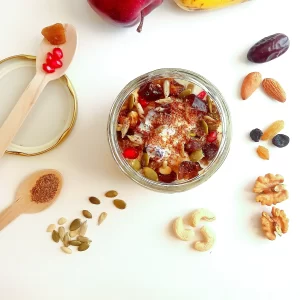
Yes. Adding fruit, dates, or blending it into smoothies can help children enjoy it more.
What if my child dislikes it?
That’s completely normal. Pause, reduce the quantity, or try again after a short break. It’s best not to force it.
Want to explore further? ^
Here are some published reviews & studies you may find interesting:
- Effect of kefir on dental bacteria in children (8–12 yrs)
Reddy S. et al — Int J Clin Pediatr Dent. 2021. (Clinical trial) - Kefir & gut-microbiota balance / immune function
Frontiers in Nutrition – Narrative Review - Kefir, kefiran & child food-allergy modulation
Royal Society of Chemistry – Review - Effects of kefir on nutritional & immune status in children
PMC – Clinical observation study - Evidence-based benefits summary of kefir
Healthline – Digestible consumer review