Whether one is new to consuming Kombucha, or has been consuming it for sometime based on a recommendation by a nutritionist/friend/family; the number one question running in their mind is – when is the best time to drink Kombucha? And no wonder, it is the number one question we are asked at pop-ups!
With so many recommendations floating around – ‘anytime is a good time’, ‘Oh, I drink it the very first thing in the morning’, ‘Post meal’ etc- here are some of Pro Mojo’s recommendations on when (and how much) to consume Kombucha, backed by whatever limited research on this subject is available.
Here’s a nice summary of those who are short on time:
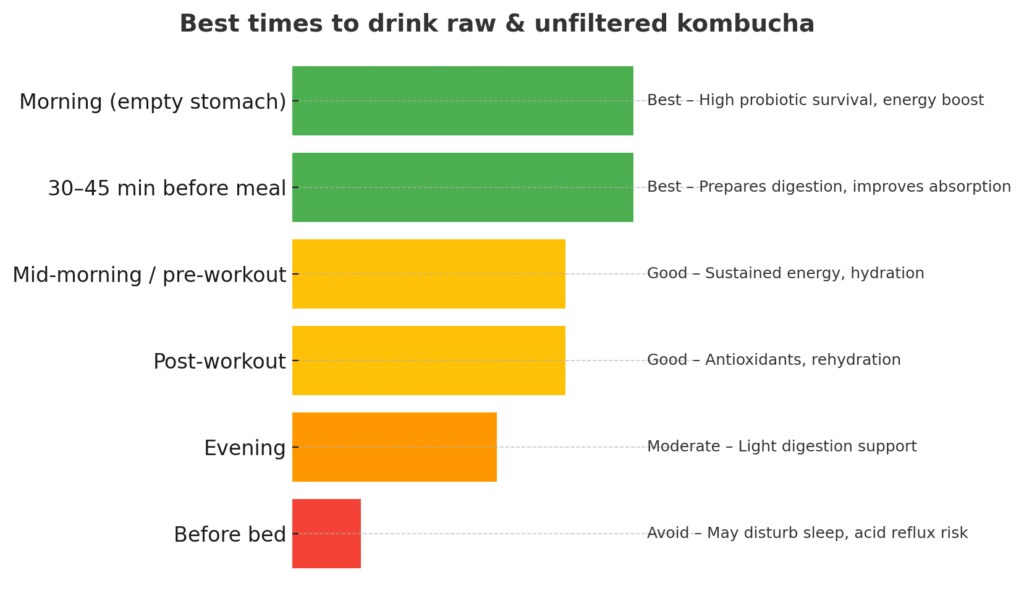
1. Morning (empty stomach)
Pros:
- Probiotic efficiency – Less food in the stomach means stomach acid levels are lower, allowing more live probiotics to survive the journey to your gut.
- Energy boost – Natural caffeine from tea & B vitamins help gently wake you up without the jitters of coffee.
- Kickstarts digestion – Organic acids (like acetic, gluconic & glucuronic) can stimulate digestive juices for the day.
Cons:
- Digestive sensitivity – Some people might experience mild stomach discomfort or loose stools if they aren’t used to probiotics early in the day.
- Acidic nature – If you have acid reflux or gastritis, morning kombucha could aggravate symptoms. Our general recommendation is that before going for a first thing in the morning dose of kombucha, try a week or two of consuming it after meals to allow your body to become accustomed to it.
2. 30–45 minutes before a meal
Pros:
- Appetite regulation – Slight tartness + organic acids may curb overeating.
- Better nutrient absorption – Prepping the gut microbiome before a meal may improve assimilation of vitamins and minerals from food.
- Digestive enzyme boost – Fermented acids can prime digestion.
Cons:
- Bloating in some – For those with very sensitive digestion, taking kombucha too close to a meal may cause temporary bloating.
- Not ideal with all meals – Pairing with already acidic meals (e.g., citrus-heavy salads) may be too much for sensitive stomachs.
3. Mid-morning or pre-workout
Pros:
- Sustained energy – Caffeine content is low but enough to sharpen focus without a crash.
- Hydration + Electrolytes – Kombucha naturally contains potassium and trace minerals from tea, helping maintain hydration before exercise.
- Gut-friendly fuel – Light calories, not heavy on the stomach.
Cons:
- Gas formation/bloating – If kombucha is artificially carbonated, one might feel uncomfortable if taken immediately before intense workouts. A naturally carbonated Kombucha from Pro Mojo, may be your best bet at this time.
- Mild alcohol content – Raw kombucha contains trace ethanol (0.3%–0.5%), which may be an issue for athletes in strict sports compliance settings. However, Pro Mojo’s Kombucha under lab tests has shown below level of quantification for alcohol.
4. Post-workout
Pros:
- Muscle recovery – Antioxidants from tea (polyphenols) can help reduce oxidative stress after exercise.
- Rehydration – Kombucha offers fluids plus trace minerals.
- Digestive recovery – Can help re-balance gut bacteria after intense physical stress.
Cons:
- Not a complete recovery drink – Kombucha lacks substantial protein and carbs needed for full muscle recovery, so it is best if it is paired with proper post-workout nutrition.
- Possible acidity irritation – Stomach may be sensitive post-exercise, so dilute or take smaller sips first.
5. Evening or before bed
Pros:
- Digestive wind-down – For those who tolerate it, kombucha’s acids and probiotics may help evening digestion.
- Alternative to sugary night drinks – Better than late-night sodas or juices.
Cons:
- Caffeine impact – Even low caffeine can disrupt sleep in sensitive individuals.
- Alcohol content – Trace ethanol may interfere with sleep quality in some people.
- Digestive stimulation – Kombucha can slightly energize the system, which is counterproductive at bedtime.
6. Regular consistency (daily intake)
Pros:
- Gut microbiome stability – Consistent exposure to beneficial yeasts and bacteria helps long-term gut balance.
- Cumulative benefits – Reduced bloating, better bowel regularity, improved immune resilience.
Cons:
- Calorie & sugar intake – Even raw kombucha contains residual sugar; daily large servings may add up.
- Tolerance adjustment – Some need time to adjust to probiotics, so starting small is better.
You can use the above as a guideline and consume Kombucha at a time that makes you feel the best!
However, keep the following in mind when you are on a Kombucha based diet: consume more fibers in the form of fruits and regularly consume water to stay hydrated,for the below reasons:
Fiber helps probiotics from kombucha thrive.
- Kombucha contains live probiotics (beneficial bacteria and yeasts).
- These probiotics need prebiotics (mainly dietary fibers from fruits, vegetables, whole grains, etc.) to grow and establish themselves in your gut.
- Without enough fiber, probiotics may pass through without fully colonizing that is to say they don’t get a chance to find a home and grow, reducing potential gut health benefits.
Hydration supports detox and digestion
- Kombucha has organic acids (like acetic, gluconic, lactic etc) and mild natural caffeine (from tea) that can have a mild diuretic effect1.
- If you’re not drinking enough water, this could slightly increase dehydration risk, especially in hot climates or after exercise.
- Adequate hydration helps in:
- Maintaining healthy bowel movements (probiotics + fiber work best with water).
- Flushing out metabolic byproducts from microbial fermentation in the gut.
- Reducing chances of mild side effects like bloating or constipation.
Reduces digestive discomfort
- Kombucha’s acids + carbonation can cause bloating if gut motility2 is slow.
- Fiber + water help move things along, balancing acidity’s effect on digestion.
Feel free to reach out to us, in case you have more queries or need more details about ‘when is the best time to consume Kombucha’!
- Which just means that drinking kombucha can make you pee a little more than usual 🙂
Diuretic means something that helps your body get rid of extra water by making you urinate more. As Kombucha contains caffeine (in small amounts) and organic acids that can have a mild “pushing” effect on your kidneys, causing them to filter out more water from your bloodstream. As a result, you end up peeing more.
But don’t worry — it’s not super strong like some medications or drinks (like coffee or soda), so it’s considered a mild effect. It just helps your body get rid of a little extra water and salt. If you’re staying hydrated, though, it’s usually no big deal! ↩︎ - A fancy way of saying how well your stomach and intestines move food, liquids, and waste through your digestive system. Good gut motility means food and waste move through your body at the right speed:
– Not too fast (which could cause diarrhea),
– Not too slow (which could cause constipation).
It’s like your digestive system working in sync to keep things moving smoothly, so your body can get the nutrients it needs and get rid of waste properly. ↩︎